
Last updated October 16, 2026
 Water damage drying
 Fire & smoke cleanup
 Mold remediation
 Storm response
 Sewage cleanup
 Reconstruction
Free visual inspection and a written scope of work before any mitigation begins - photos, moisture readings, and drying logs go in your claim file
The scope we write is the scope we bill. Anything new gets shown to you, in writing, before we touch it.
Get your free estimateDamage Restoration Cost Breakdown: The Fresno Homeowner’s Reference for 2026
Here is the number most Fresno homeowners never see coming: the “applied structural drying” line item on a water damage invoice. It looks routine. It is also where the bill quietly doubles. That single daily equipment charge, more than any material cost, explains why two identical Fresno homes with identical leaks can receive quotes twelve thousand dollars apart. This guide exists because you should not need a restoration contractor’s vocabulary to read your own invoice; for damage restoration warning signs every Fresno homeowner should know, see our companion reference. We will walk through what every line item means, what it should cost in Fresno in 2026, and the questions that separate a fair scope from a padded one. By the end, you will know more about restoration pricing than most adjusters assume you do.
Quick Answer
Water damage restoration in Fresno typically costs between $1,200 and $4,800 for a contained Category 1 leak in a 1,500 to 2,000 square foot home, while full black water remediation with structural drying in a larger home runs $8,000 to $25,000 or more. Mold remediation averages $1,800 to $6,500 depending on square footage of affected material, and fire damage restoration often starts around $8,000 and climbs quickly with content cleaning and smoke sealing. The final number depends less on the damage than on how the scope is written, which drying equipment is actually needed, and whether the contractor bills insurance directly or you pay and seek reimbursement, a topic we cover in our DIY vs professional damage restoration guide for Fresno homeowners.
Restoration work we handle
Table of Contents
- What Restoration Actually Costs by Water Category in Fresno
- The Drying Equipment Line: How Daily Charges Are Legitimately Calculated
- Insurance-Direct Billing vs. Pay-and-Reimburse: Which Gets a More Complete Restoration
- What a Written Guarantee Changes Financially (vs. a Verbal Warranty)
- Line Items to Question: Pack-Out, Disposal, Content Manipulation, Antimicrobials
- Fresno-Specific Cost Factors: Climate, Home Age, and Valley Market Realities
- How to Read a Restoration Scope Like an Adjuster
What Restoration Actually Costs by Water Category in Fresno
The first thing to understand about restoration pricing is that not all water is priced the same. The industry divides water damage into three categories, and those categories drive everything downstream: equipment hours, demolition scope, disposal costs, and whether contents get cleaned or thrown away. In Fresno, where summer temperatures regularly exceed 100 degrees, a Category 1 leak that sits for 48 hours in July can become a Category 2 or 3 problem faster than a homeowner expects. Heat accelerates microbial growth. That timeline, not the leak itself, is often what turns a $1,500 drying job into a $12,000 remediation.
Here are realistic 2026 Fresno price ranges by category, based on what we see in homes across the city, from tower district bungalows to newer subdivisions in Clovis-adjacent Fresno:
- Category 1 (clean water): Broken supply line, faucet leak, or tub overflow from clean sources. No sewage, no ground water. In a 1,500 to 2,000 square foot Fresno home, typical range is $1,200 to $4,800. This includes water extraction, drying equipment for three to five days, and baseboard or drywall repair as needed. Most jobs can be completed in under five days if caught early.
- Category 2 (gray water): Washing machine discharge, dishwasher overflow, sump pump failure. The water has significant contamination but no sewage. Typical range in Fresno is $4,500 to $11,000. Expect carpet and pad removal, antimicrobial treatment, HEPA vacuuming, and extended drying time.
- Category 3 (black water): Sewage backups, toilet overflows that saturate flooring, flood water from outside. This is the expensive one. In a typical Fresno home, expect $8,000 to $25,000 or more. Full containment, negative air pressure, demolition of saturated materials, and aggressive structural drying are standard. Furnishings and personal items are often cleaned off-site or discarded.
Square footage matters, but not in the way many homeowners assume. A 900 square foot Fresno home with black water throughout the living area can cost more than a 2,400 square foot home with a clean water leak in one bathroom. The category, not the floor area, drives the cost per square foot. When someone quotes you by square footage alone, ask what category they are pricing for. If they cannot answer, that is the first red flag.
The Drying Equipment Line: How Daily Charges Are Legitimately Calculated
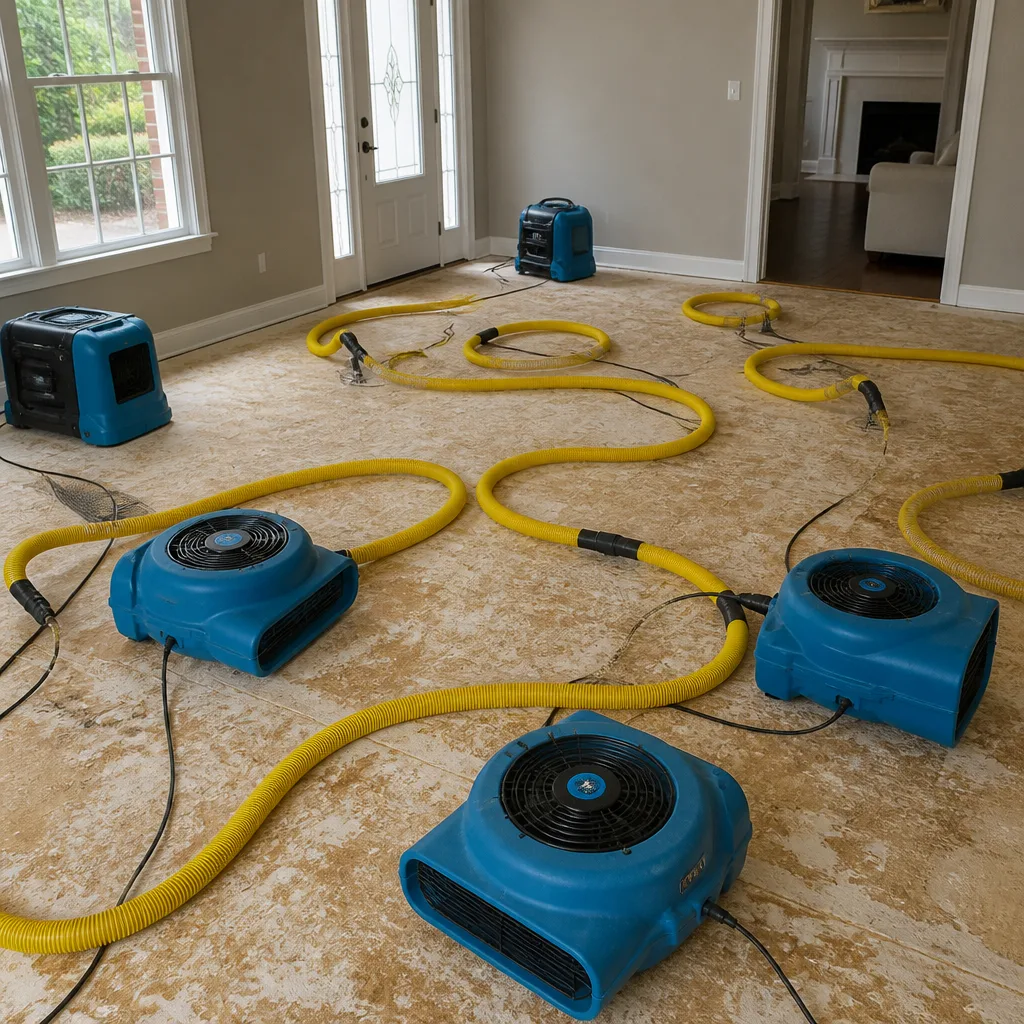
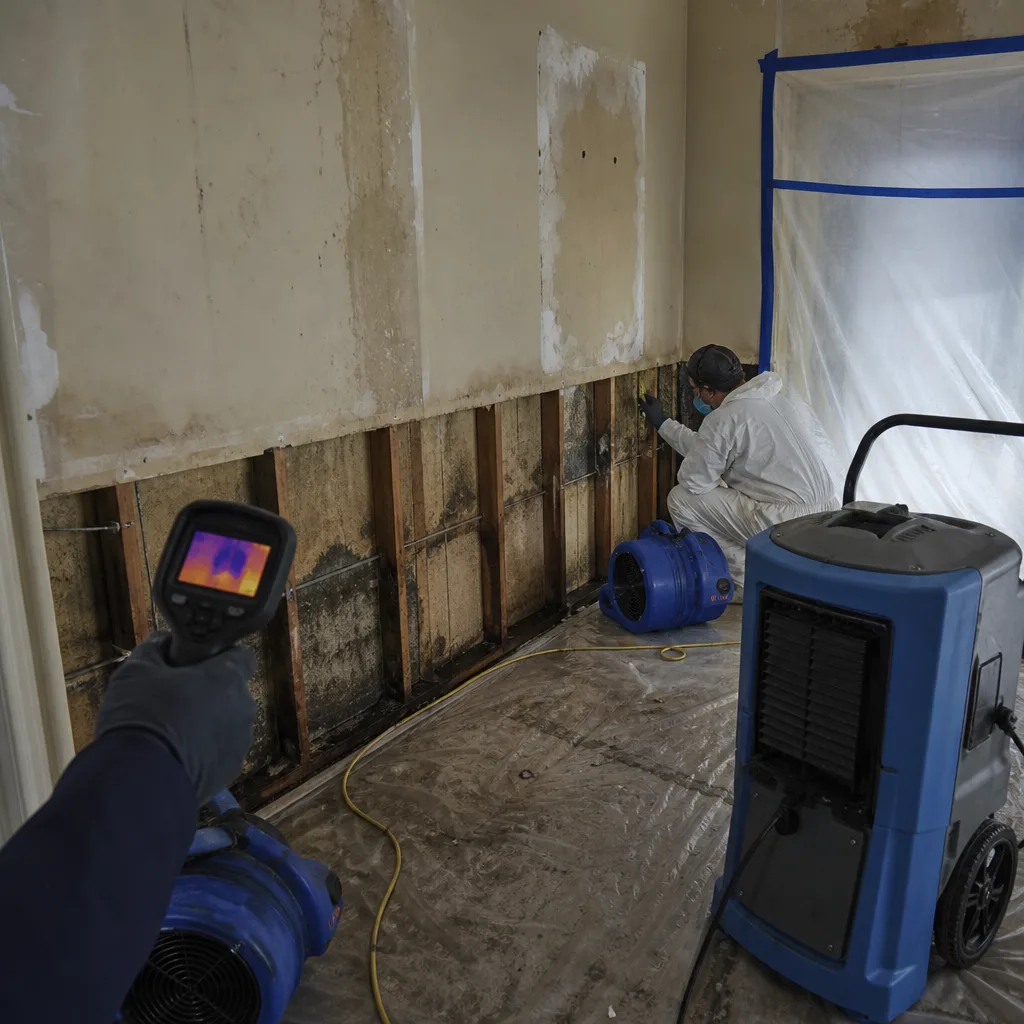
The most misunderstood line item on any Fresno restoration invoice is “applied structural drying” or “drying equipment.” This is a daily charge for each piece of equipment placed in your home. Legitimate contractors calculate it based on the IICRC S500 standard, which governs how many air movers and dehumidifiers a given room size and water category requires. The math is not complicated: a 12 x 14 room with wet carpet and wet drywall typically needs three to four air movers and one appropriately sized dehumidifier. Each air mover runs about $35 to $55 per day. A large commercial dehumidifier runs $125 to $200 per day. A few days of this adds up, and that is legitimate, because the equipment is expensive and the electricity is running through your panel.
What is not legitimate is running equipment past the point where moisture data says the structure is dry. We see this in Fresno regularly: a contractor places eight air movers in a room that needs four and lets them run for nine days instead of four. The homeowner pays for day after day of unnecessary equipment because no one was checking moisture readings. The IICRC S500 standard requires that drying be monitored with moisture meters and that equipment be removed when drying goals are met. Ask your contractor three questions. First, how many air movers and dehumidifiers are you placing, and in which rooms? Second, what are the moisture readings today, and what is the drying goal? Third, who is monitoring daily, and where is that data recorded? A contractor who cannot answer these questions is charging you for time, not for drying.
The equipment itself matters too. Professional-grade machines from companies like Dri-Eaz, Phoenix, XPOWER, B-Air, and Injectidry dry faster and more thoroughly than rental-grade box fans and residential dehumidifiers. Faster drying means fewer days of equipment charges and a lower likelihood of secondary mold issues. If a quote lists “drying equipment” without specifying the brand, class, or quantity, you cannot evaluate whether the price is fair.
Insurance-Direct Billing vs. Pay-and-Reimburse: Which Gets a More Complete Restoration
Here is a truth about restoration pricing that most Fresno homeowners do not learn until they are in the middle of a claim: the same contractor often writes a more complete scope when they are paid after the work than when they have to chase an adjuster for approval before starting. This is not about dishonesty. It is about administrative friction. When a contractor bills the insurance company directly, every additional line item, every day of equipment, every antimicrobial treatment has to be justified, documented, and approved before it happens or after, in a supplement. Some contractors, facing that friction, write a leaner scope. They skip the HEPA vacuuming they should do. They cut the drying time short. The work still gets done, but the margin of thoroughness shrinks.
When you pay the contractor directly and then seek reimbursement from your insurer, the contractor has a single customer: you. The scope is written based on what the structure actually needs, not what the adjuster is likely to approve without argument. The difference shows up most in three areas: the number of drying days, whether affected drywall is cut to a stop line rather than patched over, and whether contents are cleaned off-site or in place. In our experience in Fresno, homeowners who pay directly and submit for reimbursement end up with measurably more complete restorations, less residual moisture, and fewer six-month mold callbacks. The tradeoff is that you carry the cost for thirty to sixty days while your insurer processes the claim. If your policy allows it, and your cash flow can handle it, the pay-and-reimburse route usually leaves the house in better condition.
What a Written Guarantee Changes Financially (vs. a Verbal Warranty)
A verbal warranty is worth exactly what it costs: nothing. We have walked into Fresno homes where a previous contractor said “we stand behind our work” and six months later, when mold reappeared behind a baseboard, the phone number was disconnected. A written guarantee changes the financial risk in a specific and calculable way. If mold regrows or a seam fails, the cost of fixing it is on the contractor, not on you. That is real money, because a mold re-remediation in a Fresno bathroom can run $2,500 to $5,000. A structural repair after a subpar drying job can run more.
The 365-Day Done Right Promise is a written commitment that if the restoration is not done right, it is made right, on our dime. That promise changes how we write scopes. We do not skip the antimicrobial treatment to shave cost, because we would be paying for it later. We do not pull equipment early to free up machines for another job, because the moisture reading is what releases the equipment, not the schedule. When you compare quotes in Fresno, ask this question: which contractor will put the warranty in writing with a specific time period and a specific remedy? If the answer is none, the lower quote is probably not the better deal.
Line Items to Question: Pack-Out, Disposal, Content Manipulation, Antimicrobials
Some line items are necessary. Some are padding. Here is how to tell the difference, based on what we see routinely in Fresno restoration scopes:
- Pack-out and content manipulation: Moving furniture and belongings out of the affected area is legitimate work, but many contractors bill it as a separate line item when it should be part of base labor. If the scope charges separately for “moving sofa to center of room,” that is not how reputable restorers bill. Ask for pack-out to be included in the base labor line, or itemized only if it involves off-site storage.
- Disposal fees: Demolition debris has to go somewhere. But Fresno disposal fees are lower than many contractors bill. A full truck load of drywall and carpet from a 1,500 square foot home should not cost $800 to dispose. Ask to see the disposal receipt or have disposal billed at cost.
- Antimicrobial treatment: For Category 2 and 3 water, antimicrobial application is required by IICRC S500. But some contractors bill it as a premium add-on when it should already be in the base scope for any water category above Category 1. If your quote lists antimicrobial treatment as a separate line item on a Category 2 job, ask why it is not already included.
- HEPA vacuuming: This is standard practice after any Category 2 or 3 remediation. It should not be an optional line. If the scope does not mention HEPA vacuuming at all, you are looking at an incomplete scope.
- Content cleaning: For clean water jobs, content cleaning is often just moving items and wiping down surfaces. For black water jobs, it may involve professional cleaning and off-site storage. The line item should describe exactly what is being cleaned, how, and where. Vague “content cleaning” lines with no detail are a sign to ask more.
The pattern here is simple: legitimate line items have a specific task, a specific reason, and a specific method attached to them. Vague or duplicated line items are where padding hides.
Fresno-Specific Cost Factors: Climate, Home Age, and Valley Market Realities
Fresno’s climate shapes restoration pricing in three ways that matter to your invoice. First, summer heat. A house with standing water in July can develop mold in 24 to 48 hours, faster than the 48 to 72 hour window common in cooler climates. That means faster response times, more equipment, and often a higher bill if the damage is not caught immediately. Second, hard water. Fresno’s water supply is mineral-heavy, which affects drying equipment and increases scale buildup in dehumidifiers used for long drying cycles. Contractors who maintain their equipment pass that cost through in slightly higher daily rates, and it is legitimate. Third, the San Joaquin Valley’s inversion layer traps humidity in winter, which slows evaporation and extends drying time on exterior wall cavities after roof leaks.
Home age matters too. Fresno has thousands of post-war homes built between 1945 and 1970, many with plaster walls, hardwood floors, and original framing. Plaster wicks water differently than modern drywall and often requires slower, longer drying rather than demolition. Hardwood floors in these older homes can sometimes be saved with Injectidry panel drying systems, which push air through the cavity beneath the floorboards. That equipment is more expensive per day than standard air movers, but it costs far less than replacing original hardwood floors that would never be refinished to the same quality. If you have an older Fresno home, ask specifically whether the scope considers panel drying before demolition is recommended.
How to Read a Restoration Scope Like an Adjuster
Insurance adjusters evaluate restoration scopes by asking a series of specific questions about each line item. You can do the same thing. Here is the step-by-step process we recommend to every Fresno homeowner before signing a work authorization:
- Start with the water category. A legitimate scope names the category first: 1, 2, or 3. If the category is not written on the scope, the contractor has not done the assessment properly.
- Match equipment to rooms. The scope should list each room affected, the square footage, the number of air movers, and the dehumidifier class. Every piece of equipment should be assigned to a specific space. Equipment listed without a location is not a plan.
- Check for daily monitoring language. The scope should state that moisture readings will be taken daily and that equipment will be removed when drying goals are met. If the scope says “equipment for 7 days” with no monitoring clause, that is a red flag.
- Look for demolition specificity. Affected drywall should be cut to a stop line, measured in inches or feet. If the scope says “remove wet drywall as needed” without measurements, you cannot verify whether the demo was appropriate.
- Confirm antimicrobial and HEPA language. For Category 2 and 3 water, both should appear explicitly in the scope, not as optional add-ons.
- Ask what is NOT included. Every scope has exclusions. The contractor should be able to tell you what is excluded and why. If they cannot, the scope is not done.
This is what Rick Sumner teaches every homeowner who calls Tidemark Water Damage Fresno home before they sign anything. Reading a scope like an adjuster takes fifteen minutes and can save thousands of dollars.
Common Mistakes to Avoid
- Signing a work authorization before reading the scope. The work authorization is a contract. If the scope is attached to it and you have not read the scope, you are signing something you have not seen. Ask for the scope to be delivered and reviewed first.
- Accepting a square-footage-only quote. Damage category drives cost more than square footage. A quote that prices by square footage alone, without naming the water category, is not a real estimate.
- Ignoring the drying goal. What moisture reading defines “dry”? If the contractor cannot name the number, they are not doing moisture monitoring. You are paying for time, not drying.
- Assuming insurance covers everything. Many Fresno policies have caps on mold remediation and slow-leak exclusions. Know what your policy covers before the damage happens, not after.
- Waiting to address a slow leak. A pinhole leak behind a Fresno bathroom vanity is a $600 repair. The mold remediation it becomes six weeks later is a $4,000 project. Time is the most expensive line item in restoration.
- Choosing by price alone. The cheapest quote often becomes the most expensive claim supplement later. Look at the scope, the warranty, and the equipment first.
When to Call a Professional
Call a professional when the water has sat for more than a few hours, when it has reached drywall or flooring, when the water is anything other than clean municipal water, or when you see mold growth of any size. The same applies after a fire: smoke and soot penetrate surfaces in ways that household cleaning cannot address. A professional assessment costs nothing in most cases, because reputable Fresno restoration companies offer free estimates, and it tells you whether you are dealing with a drying job or a remediation job. At Water Damage Restoration in Fresno, we answer the phone day or night at (559) 354-1680, with a real person on the line, not a callback queue. If the damage is minor and contained, we will tell you that too. The goal is to know what you are facing before you commit to any work.
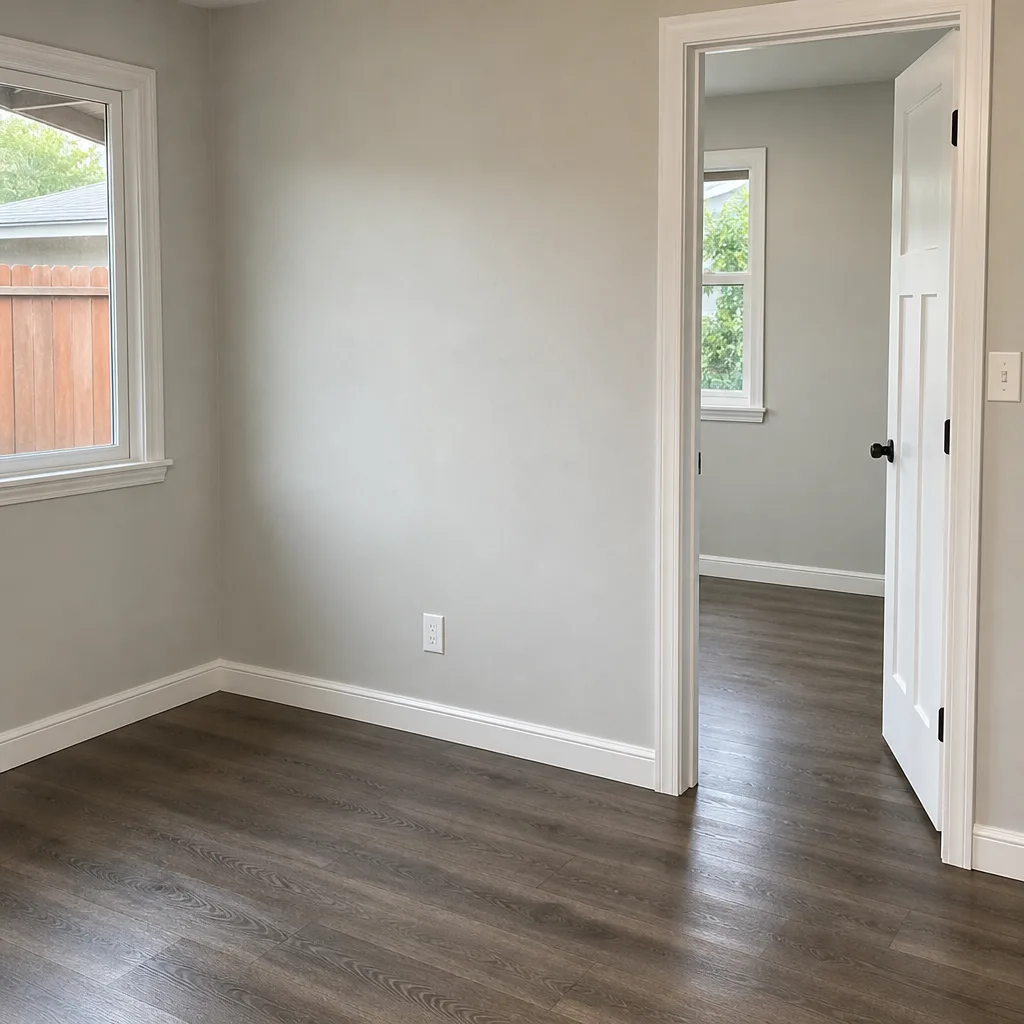
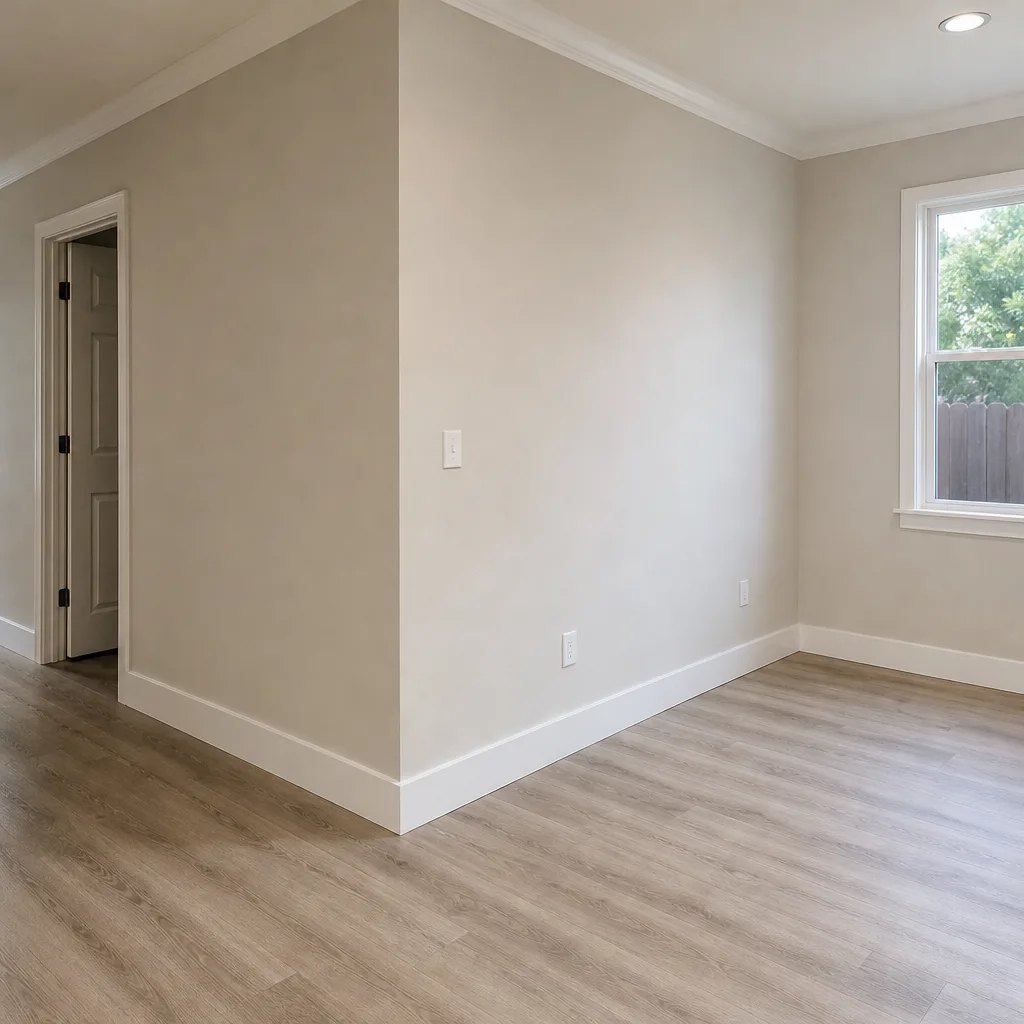
See the difference
 Before
 After
After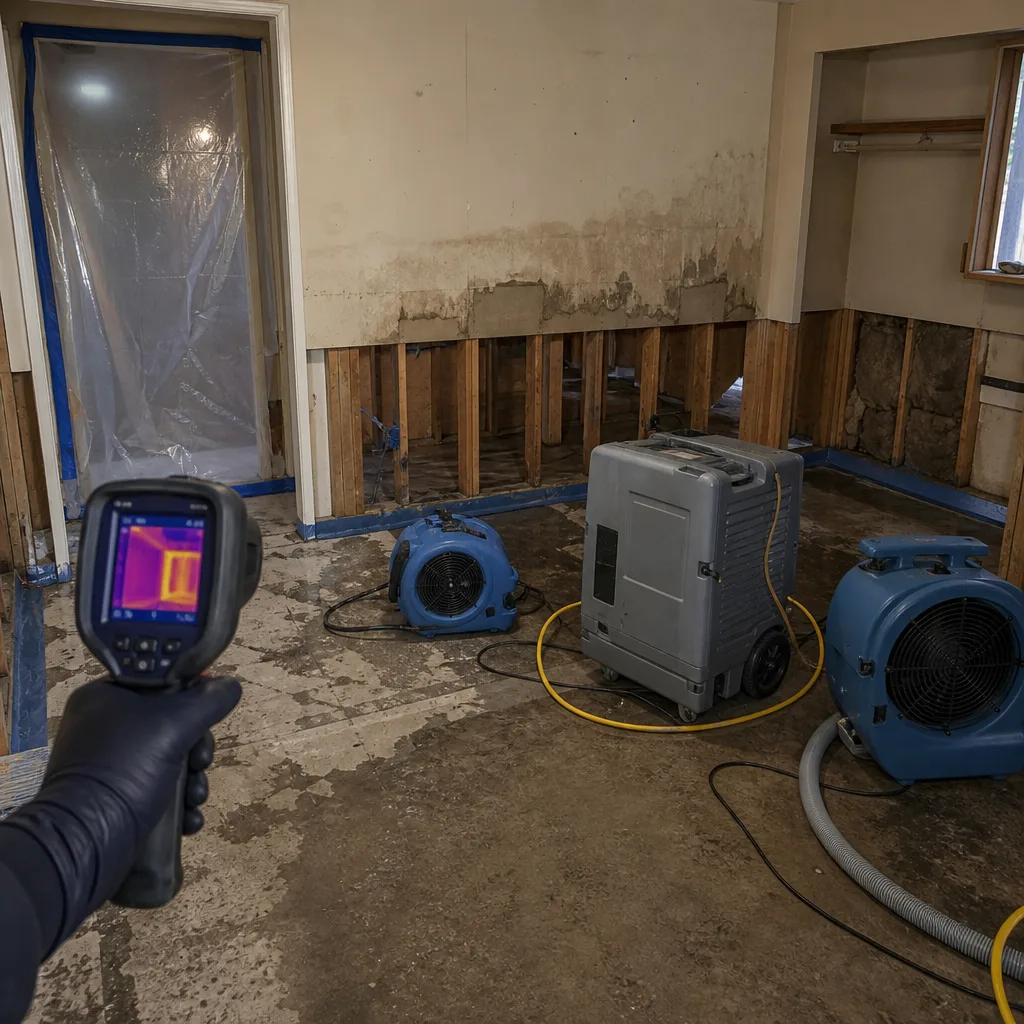 Before
 After
After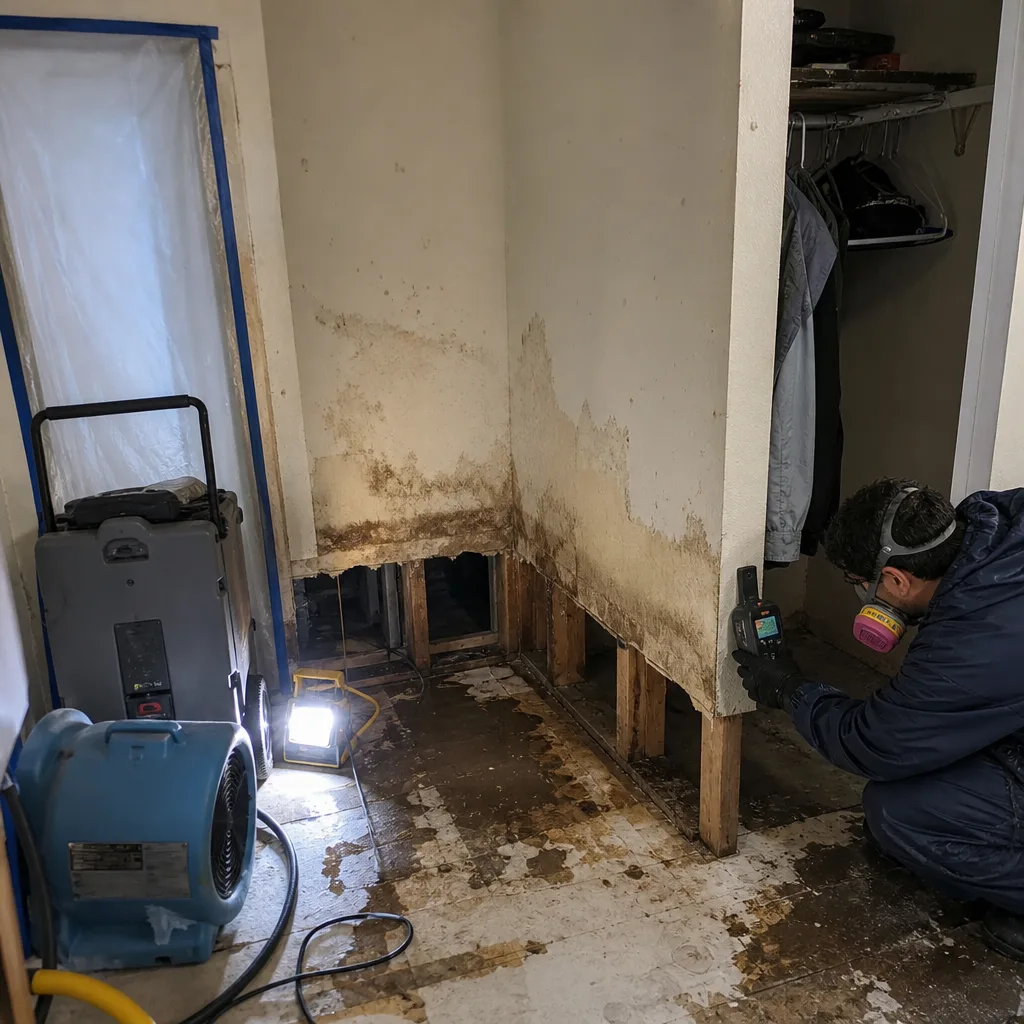 Before
 After
AfterFrequently Asked Questions
Water damage restoration in Fresno typically costs $1,200 to $4,800 for clean water in a standard home, $4,500 to $11,000 for gray water, and $8,000 to $25,000 or more for black water or sewage. The water category, affected square footage, and drying time are the three biggest cost drivers. Call (559) 354-1680 for a written estimate before any work starts, and explore our more guides & resources on protecting your home.
For clean water damage caught early, structural drying in Fresno typically takes three to five days. Gray or black water jobs take longer, often five to seven days, and older homes with plaster walls may need extended drying. The moisture meter, not the calendar, determines when equipment comes out.
Most Fresno homeowners’ policies cover mold remediation only if it results from a covered water loss, and many have a separate mold cap, often $5,000 to $10,000. Slow leaks, lack of maintenance, and pre-existing mold are commonly excluded. Read your policy or call your agent before assuming coverage.
The tide mark is the line water leaves on a wall or floor as it rises, and it is the first thing our technicians look for on every job. It tells us how high the water traveled, which materials it saturated, and what needs to come out versus what can be dried in place. An accurate tide mark assessment determines whether your job costs $2,000 or $12,000.
For very small, contained spills on non-porous surfaces, yes. But if water has reached drywall, carpet, or subfloor, household fans cannot move enough air to dry structural cavities. Surface-dry drywall hides moisture inside the wall cavity, which is where mold grows. The fans you rent from a hardware store are not the same machines used by restoration professionals.
Most reputable Fresno restoration companies dispatch same day, and many respond within one to two hours for active water emergencies. At Mold Remediation in Fresno, we answer live around the clock at (559) 354-1680, with a uniformed, background-checked technician dispatched quickly to stop the damage from spreading while an estimate is prepared.
The Bottom Line
Restoration costs in Fresno vary by a factor of three for identical jobs because scopes, not materials, determine the final bill. The water category, the drying equipment plan, the monitoring schedule, and the warranty all shape what you pay. Reading your scope like an adjuster, asking for written prices before work starts, and choosing a contractor with a written guarantee are the three highest-leverage things you can do. At Fire Damage Restoration in Fresno, we deliver a written price before any work begins, and we stand behind every job with the 365-Day Done Right Promise. Call (559) 354-1680 any time for a free, honest assessment of your damage.
Written by Rick Sumner, Owner at Tidemark Water Damage Fresno, serving Fresno since 2006.