
Last updated October 16, 2026
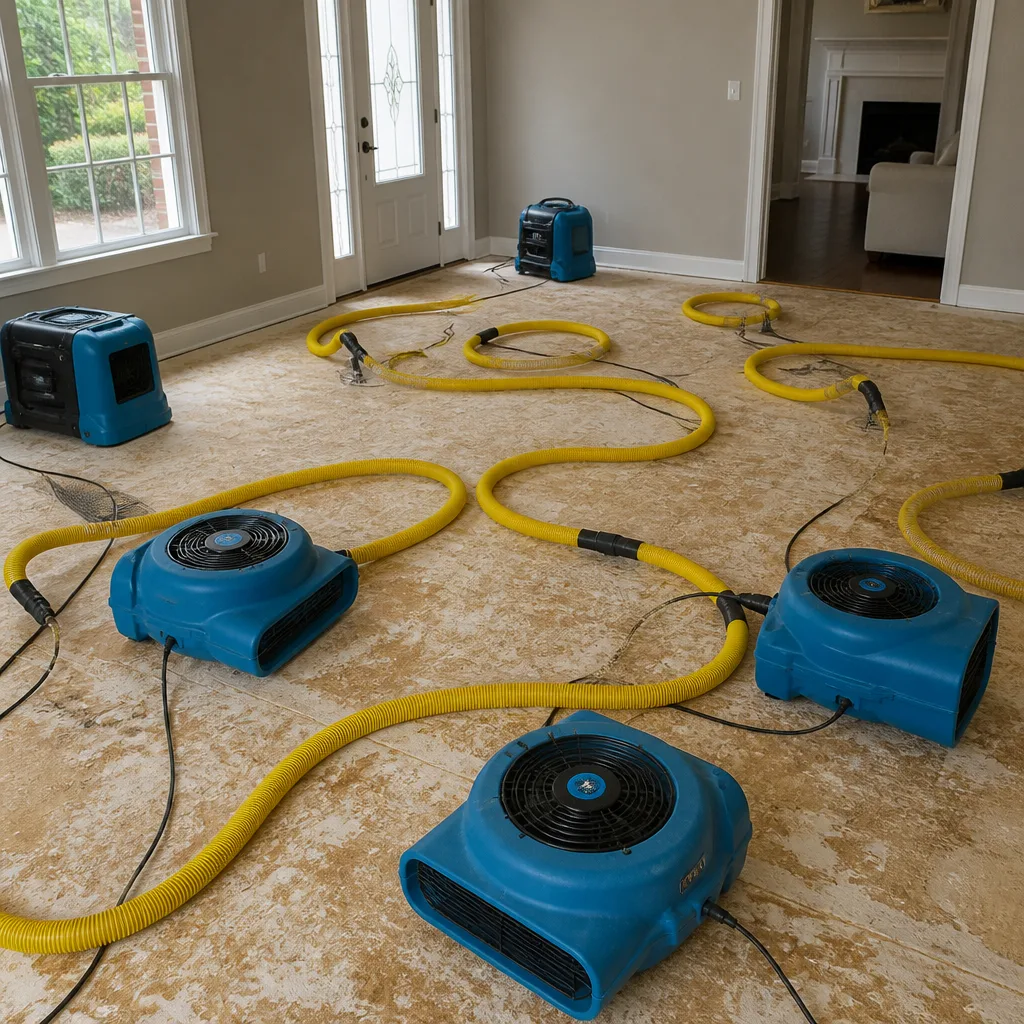 Water damage drying
 Fire & smoke cleanup
 Mold remediation
 Storm response
 Sewage cleanup
 Reconstruction
Free visual inspection and a written scope of work before any mitigation begins - photos, moisture readings, and drying logs go in your claim file
The scope we write is the scope we bill. Anything new gets shown to you, in writing, before we touch it.
Get your free estimateThe Complete Guide to Damage Restoration in Fresno
Here is a number most Fresno homeowners never hear until it is too late: the average water damage claim in this city takes 47 days to fully close. But the decisions that determine whether your restoration costs $4,000 or $14,000 are almost always made in the first four hours. This guide walks you through the entire damage restoration process in Fresno, from the first phone call to the final walkthrough, so you can move through each phase knowing what should happen, what should not happen, and what questions to ask before anyone picks up a tool.
Quick Answer
Damage restoration in Fresno is the process of returning a home to its pre-loss condition after water, mold, or fire damage through four distinct phases: mitigation, drying, remediation, and rebuild. In Fresno specifically, hard water and clay-heavy soil mean water damage moves differently than it does in coastal California cities, making faster drying decisions more important. For most Fresno homes, water damage restoration costs between $2,500 and $12,000 depending on the size of the affected area and how far the water traveled behind walls.
Restoration work we handle
Table of Contents
- Why Damage Restoration Is Different in Fresno
- The Four Phases of Restoration and Who Handles Each
- What a Tide Mark Is and Why It Determines Your Bill
- How to Read a Scope of Work Document
- Water Damage in Fresno Homes: What to Expect
- Mold Remediation in Fresno: The Drying Connection
- Fire Damage Restoration: What Fresno Homeowners Should Know
- The Cedarwell Care Promise Standard: Written Price, Pet-Safe Products, 365-Day Done Right
Why Damage Restoration Is Different in Fresno
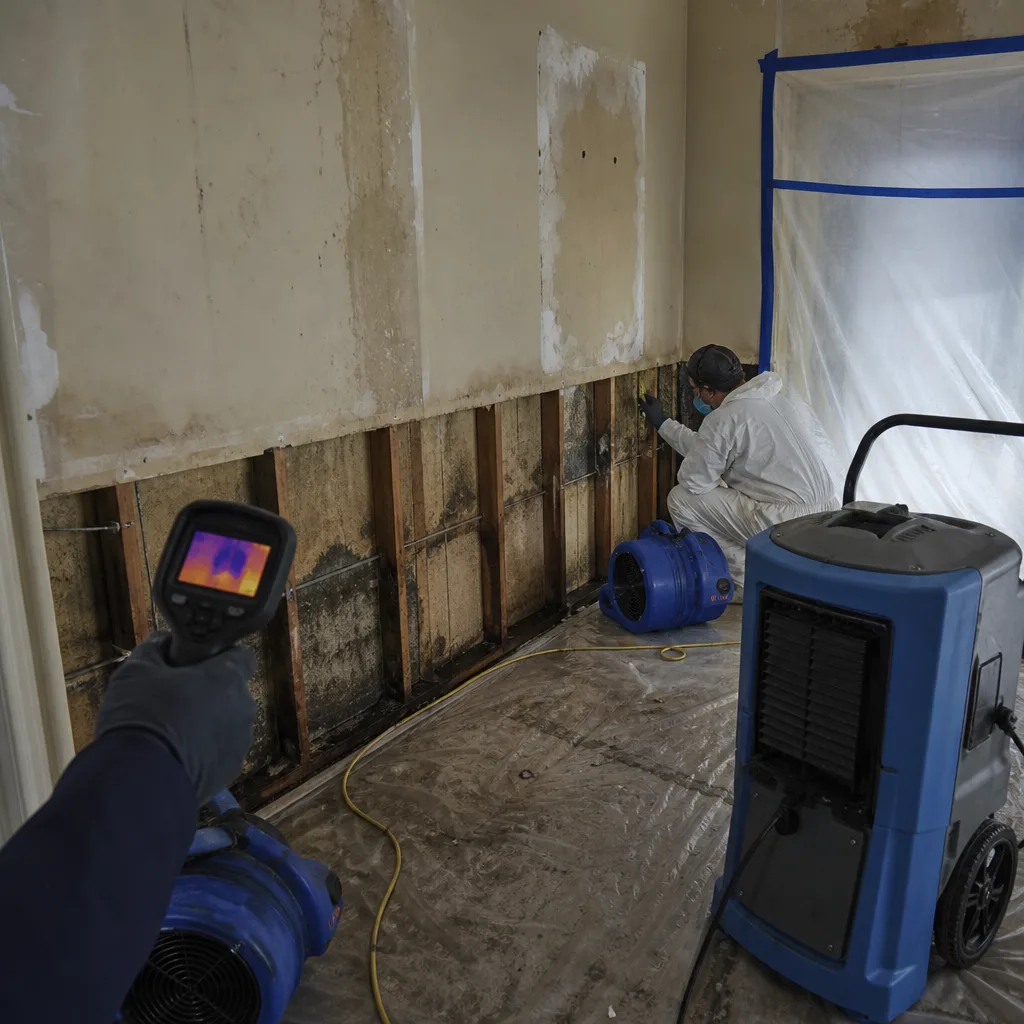
Most restoration guides are written for a generic American house in a generic American climate. Fresno is neither. The city sits in the San Joaquin Valley, where summer temperatures routinely pass 100 degrees and the air stays dry for months at a time. That heat is good news for drying, but it also creates a false sense of progress. A wall can feel dry to the touch within 48 hours while the wood framing behind it is still holding enough moisture to grow mold for weeks. This is why our technicians do not rely on touch. We use moisture meters and thermal imaging to find what the eye cannot see.
The second Fresno-specific factor is the water itself. Fresno’s municipal water supply is moderately hard, carrying dissolved minerals that stay behind as water evaporates. When water wicks up drywall or through carpet padding, those minerals deposit along the waterline, creating what restoration professionals call a tide mark. The mineral content also means that wet materials in Fresno often develop a white, chalky residue as they dry, which can confuse homeowners into thinking the damage is worse than it is, or lead an inexperienced contractor to over-dry and over-charge.
Then there is the soil. Much of Fresno sits on clay-heavy ground that expands when wet and contracts when it dries. A slab leak under a home in the Tower District or a slow pipe leak near a foundation wall behaves differently in clay soil than it would in sandy coastal dirt. The water does not drain away as quickly, which means it sits against the foundation longer and wicks further up into framing. Homeowners in Fresno who catch a leak early often avoid the worst of it, but those who wait, even a day or two in some cases, face secondary damage that coastal homeowners rarely see.
None of this should alarm you. It should simply tell you that damage restoration in Fresno is not a one-size-fits-all process, and the contractor you choose should understand the local conditions rather than applying a national playbook. The team at Tidemark Water Damage Fresno home has worked on Fresno homes since 2006, and we have seen firsthand how hard water and clay soil change how a restoration job should be scoped.
The Four Phases of Restoration and Who Handles Each
Restoration is not a single service. It is a sequence of four distinct phases, each with its own purpose, timeline, and, in California, its own licensing requirements. Understanding these phases before you need them will save you from agreeing to work that is incomplete, unnecessary, or legally questionable.
- Mitigation. This is the emergency response. Water is extracted, wet materials are removed or stabilized, and barriers are placed to stop further damage. Mitigation is what should happen within hours of water or fire damage. In California, mitigation can be performed by a licensed restoration contractor or a general contractor, but any structural changes require a contractor’s license. The goal is simple: stop the spread.
- Drying. Once the water is extracted, professional-grade air movers and dehumidifiers are placed to dry the structure to a target moisture content. This phase typically takes three to five days in Fresno’s dry heat, but it can take longer in winter months or when water has wicked deep into framing. Drying is where the tide mark matters most, because that is the visible boundary of how far moisture has traveled and how far the drying equipment must reach.
- Remediation. This is the removal of contaminants. For water damage, remediation means cleaning and sanitizing affected areas. For mold, it means containment, removal of colonized materials, and HEPA vacuuming. In California, mold remediation that disturbs more than 10 square feet of mold requires specific training and certification, which is why the IICRC and IFA credentials matter on a job like this.
- Rebuild. The final phase is putting the home back together: drywall, flooring, paint, trim, and sometimes cabinetry. In California, this work requires a general contractor’s license, and it is typically the most expensive phase. A restoration company may handle rebuild in-house or coordinate with a separate licensed contractor. Either way, you should receive a written scope of work before rebuild begins, not a verbal estimate.
In our experience, Fresno homeowners get the best outcome when the same team handles mitigation through remediation and then coordinates the rebuild with a written plan. When phases are handled by different companies with no shared documentation, details get lost, and the homeowner ends up paying for the gaps. Learn more about Water Damage Restoration in Fresno and how the phases should flow together.
What a Tide Mark Is and Why It Determines Your Bill
A tide mark is the line water leaves on a wall, baseboard, or piece of drywall as it evaporates. It is often faint, slightly yellow or chalky from Fresno’s mineral-heavy water, and it is the single most important piece of evidence in a water damage restoration job. The reason is simple: water travels further than the tide mark shows. The tide mark tells you where the water stopped wicking upward, which means everything below that line was wet at some point, and everything a few inches above it may have been wet enough to compromise the drywall’s structural integrity.
A contractor who is not chasing the tide mark is guessing. They might pull the wet carpet, put a fan in the room, and call it done. But the water that wicked behind the baseboard and into the wall cavity will still be there, and in Fresno’s warm climate, it will find the conditions it needs to grow mold. We look for the tide mark on every single Water Damage Restoration in Fresno job, then we dry past it. That means placing our Dri-Eaz dehumidifiers and Phoenix air movers to pull moisture from beyond the visible line, not just from the obvious puddle.
How do you verify your contractor is doing this? Ask them to show you the moisture readings. A professional restorer will use a moisture meter and document readings from the affected area, the tide mark line, and the materials beyond it. Those readings should be taken daily during the drying phase, and they should trend downward. If your contractor cannot show you readings, or if the readings are only taken from the middle of the room, they may not be drying past the tide mark, and you may be paying for a job that will fail.
How to Read a Scope of Work Document
A scope of work is the written description of everything a restoration company will do on your job and, just as importantly, everything it will not do. In California, a detailed scope is your best protection against surprise costs, because it is the document that controls what gets billed. Before you sign anything, here is what to look for.
First, the scope should list every room affected, not just “downstairs” or “back of house.” If the water started in a bathroom and wicked into two adjacent bedrooms, all three rooms should be named. Second, the scope should itemize the work by phase: mitigation, drying, remediation, and rebuild. If a phase is missing, ask why. Third, the scope should name the equipment being used and the expected drying time. You should see brand names like Dri-Eaz, Phoenix, XPOWER, or B-Air, not a vague reference to “fans.” Equipment matters because the right air mover and dehumidifier combination is what gets your home dry in days instead of weeks.
The scope should also include what is not covered. Will they move furniture? Remove baseboards? Cut drywall? Reinstall toilet tanks? Every one of these items has a cost, and if it is not in writing, you may be asked to pay for it later. Finally, look for a line about the final condition. A good scope will say something like “affected areas dried to 10-12% moisture content and cleaned to IICRC S500 standards.” That is your benchmark for judging whether the job was done right.
All work we perform at Tidemark Water Damage Fresno starts with a written price before any work begins, and the scope is part of that document. You will see the number before a single tool enters your home, and that number will not change unless the scope itself changes with your written approval.
Water Damage in Fresno Homes: What to Expect
Water damage is the most common restoration call we handle in Fresno, and it almost always starts the same way: a supply line fails, a water heater leaks, a dishwasher overflows, or a toilet tank cracks. The water does not care what time it is. It moves fast, follows gravity, and wicks into anything porous: carpet, padding, drywall, baseboards, cabinetry, and sometimes the subfloor itself.
Here is a realistic timeline of what water damage in a Fresno home looks like over the first week:
- First hour: Water pools in the room of origin and begins spreading into adjacent rooms. Carpet padding acts like a sponge and starts holding water against the subfloor.
- First 4 hours: Drywall begins wicking water upward from the base. MDF baseboards start swelling. Furniture legs in contact with water begin absorbing it. This is the window where extraction makes the biggest difference in final cost.
- Days 1-3: In Fresno’s heat, mold spores that were dormant in dust begin activating in damp materials. A musty odor appears. Paint may blister where drywall is saturated. This is when professional drying equipment should already be running.
- Days 4-7: Unaddressed water damage becomes visible mold growth on surfaces and inside wall cavities. Secondary damage spreads to subfloors and framing. The restoration bill is now significantly higher than it would have been on day one.
The key number for Fresno homeowners is the first four hours. If you can get water extracted and air movers running within that window, you have a strong chance of avoiding mold remediation entirely. If the water sits overnight, you are almost certainly looking at a bigger scope. A price you see in writing on day one is the price that protects you from the cost creep that happens when damage spreads.
Learn more about what a full water damage response involves on our dedicated page: Water Damage Restoration in Fresno.
Mold Remediation in Fresno: The Drying Connection
Mold and water damage are not separate problems. They are two points on the same timeline. Where there is water that was not dried properly, mold follows. In Fresno’s warm climate, that timeline is shorter than in many parts of California. We have seen mold colonization begin within 48 hours of a leak in homes where the indoor temperature stayed above 75 degrees with the AC off.
Mold remediation is not the same as cleaning. Cleaning addresses surface mold you can see. Remediation addresses the mold you cannot see: the colonies growing behind baseboards, inside wall cavities, under flooring, and in HVAC ducts. The industry standard, set by the IICRC and adopted in California, is that remediation requires containment when visible mold covers more than 10 square feet. Containment means sealing the affected area with plastic sheeting, creating negative air pressure, and using HEPA filtration to prevent spores from spreading to clean rooms during removal.
Here is what a proper Mold Remediation in Fresno job should include:
- A written assessment of where the mold is and what caused the moisture in the first place
- Containment and negative air pressure during removal
- Removal of colonized porous materials, typically drywall and insulation, to a point beyond visible growth
- HEPA vacuuming of all exposed surfaces inside containment
- Antimicrobial treatment of remaining framing and structural materials
- Post-remediation verification to confirm spore counts have returned to normal background levels for the area
Homeowners often ask us whether they really need full remediation or just a cleaning. The honest answer depends on what is behind the wall. If visible mold is small and contained, a cleaning with HEPA vacuuming and antimicrobial treatment may be enough. If there is any indication that water has been inside a wall cavity for more than a couple of days, full remediation is almost always the safer and cheaper path in the long run, because a cleaning will not reach the growth that is already inside the framing. For households with children or pets, the question is not just about cost but about air quality, and we use pet-safe products wherever there is a choice.
Fire Damage Restoration: What Fresno Homeowners Should Know
Fire damage in Fresno takes three forms, and all three must be addressed, even though only one is visible. The first is the fire itself: charred framing, ruined flooring, destroyed cabinetry. The second is smoke, which penetrates porous materials and bonds with surfaces. The third is water, because the water used to put out the fire often causes as much secondary damage as the fire itself. A fire restoration job that ignores smoke or water will leave a home that looks restored but smells like a campfire for years.
Smoke is the most underestimated part of fire restoration. Fine smoke particles are small enough to enter wall cavities, ductwork, and even closed drawers. They bond with plastics and painted surfaces, and they require specialized cleaning agents and, in some cases, ozone or hydroxyl treatment to remove. A contractor who only removes charred material and repaints is not restoring the home. They are covering the problem.
The restoration sequence for Fire Damage Restoration in Fresno is different from water damage. Mitigation starts with boarding up openings and tarping the roof to prevent further weather damage and theft. Then the water from firefighting is extracted and drying begins. Only after the structure is dry does the smoke and soot cleanup begin, followed by structural repair and rebuild. This sequence matters because cleaning soot from a still-damp structure will create a paste that seeps into surfaces and becomes nearly impossible to remove later.
Fire restoration is not a same-day response. It is a scoped, scheduled, written-in-advance process, and the rebuild portion should be treated like a remodel, with a clear timeline, clear pricing, and a licensed contractor on the job. Rick Sumner, Owner at Tidemark Water Damage Fresno, has guided Fresno homeowners through fire restoration since 2006 and will not let a job move forward without a written scope in place.
The Cedarwell Care Promise Standard: Written Price, Pet-Safe Products, 365-Day Done Right
Most Fresno homeowners trying to choose a restoration company face the same problem: every company says it is the best. Star ratings can be gamed, and review counts do not tell you how a company will treat your home when your family is stressed and your floors are wet. The Cedarwell Care Promise standard, which Tidemark Water Damage Fresno operates under as an independently owned and operated location, replaces vague claims with three specific commitments that matter more than any rating.
Written price before any work starts. Restoration is one of the trades where surprise invoices are a known problem. A company quotes one number on the phone, and the final bill is three times higher because of “unexpected conditions.” Our standard is simple: you receive a written price before a single tool enters your home, and that written price is what you pay. If the scope changes, you approve the change in writing before additional work proceeds. No surprises, no pressure, no adjustments after the fact.
Pet-safe products. Most restoration products are industrial-strength, because they have to be. But where there is a choice, we choose the product that is safe for the dog sleeping in the next room and the toddler crawling on the floor, not just the one that is cheapest in bulk. We also run equipment on lower-decibel settings during nap time and school hours when the family needs quiet. It is not an upsell. It is the C.A.R.E. code: clean up like it is our own home, ask before we move or touch anything, respect the family’s time and quiet hours, explain the price before the work.
The 365-Day Done Right Promise. If the restoration is not done right, we make it right. That promise extends for a full year after the crew leaves, because we know that drying problems and hidden secondary damage sometimes take months to appear. This is the standard that national franchises do not match, and it is backed by the equipment and credentials behind every job: Dri-Eaz, Phoenix, XPOWER, and B-Air drying equipment, operated by IICRC-, RIA-, and IFA-credentialed technicians.
The name TIDEMARK exists because of what we chase on every job. A tide mark is the line water leaves on a wall, the first thing our technicians look for on every site. The company is built around finding that line and drying past it, not just drying the visible puddle and hoping for the best.
Common Mistakes to Avoid
- Waiting to see if it dries on its own. In Fresno’s heat, a damp wall can feel dry in two days while the cavity behind it is still wet enough for mold. If water touched drywall, carpet padding, or baseboards, professional drying is almost always cheaper than the remediation that comes later.
- Accepting a verbal estimate. If the price is not in writing before work starts, you are exposed to surprise charges. A written scope of work protects you and sets the standard for what “done” means.
- Using a home dehumidifier and a box fan. Household equipment moves air but cannot generate the low-grain humidity and focused airflow needed to dry wall cavities and subfloors. The result is a dry surface and a wet structure, which is the textbook setup for hidden mold growth.
- Hiring a contractor who cannot show moisture readings. Without daily moisture readings from a meter, you cannot verify that drying is actually working. Ask to see the numbers, and ask what target moisture content they are drying to.
- Ignoring the water source. Extracting water without fixing the source, a failed supply line, a leaking water heater, a slab leak, means the problem will return. In Fresno’s clay-heavy soil, an unresolved slab leak can continue causing damage for months before a homeowner notices the new tide mark.
- Skipping post-remediation verification on mold jobs. A mold job is not done when the crew leaves. It is done when independent testing confirms spore counts are back to normal background levels for Fresno. Verify before you move your family back in.
See the difference
 Before
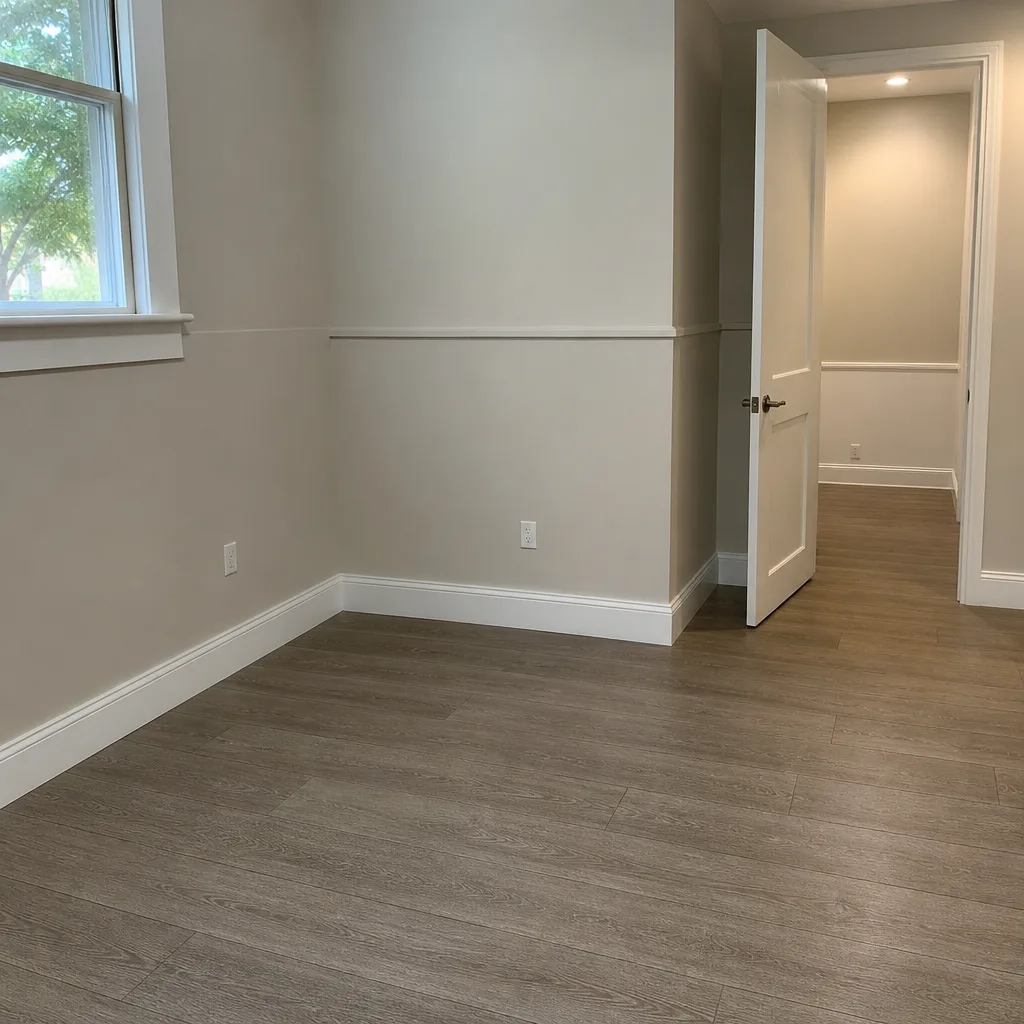 After
After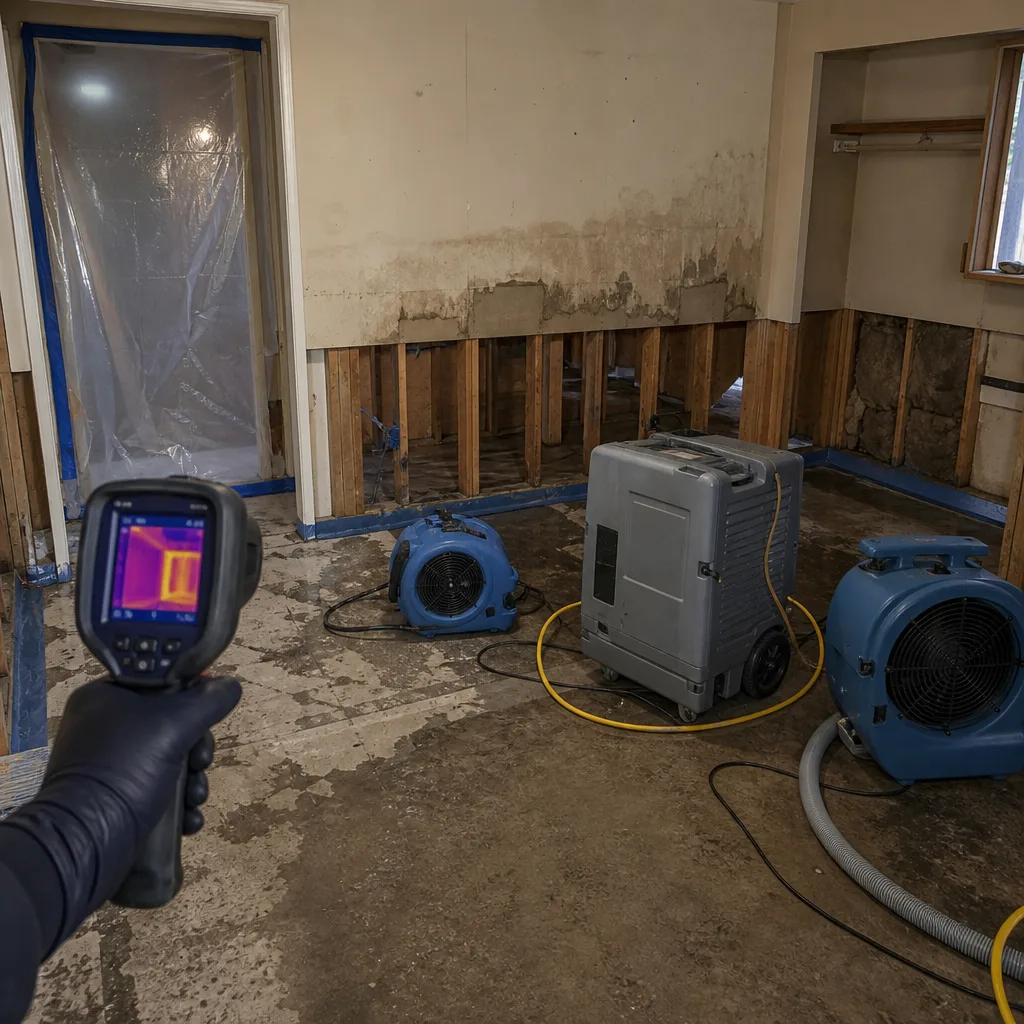 Before
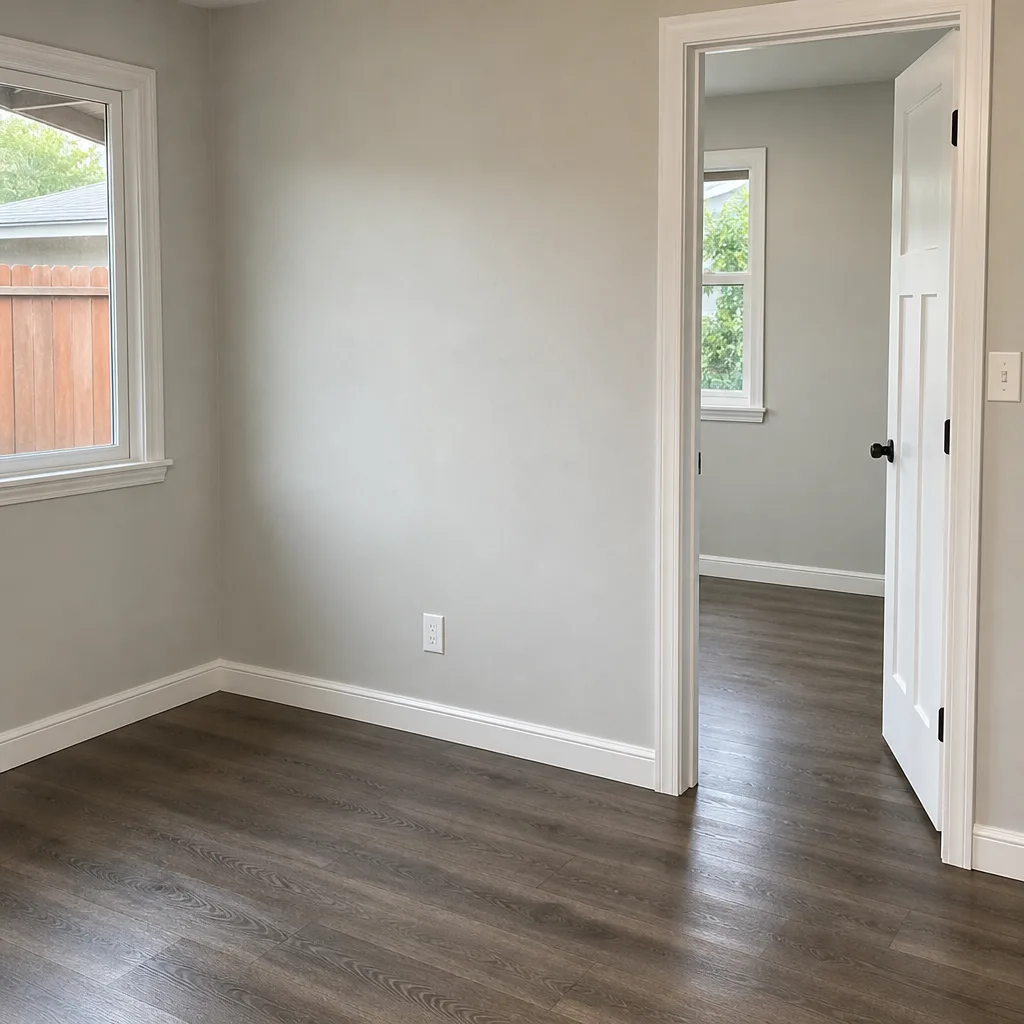 After
After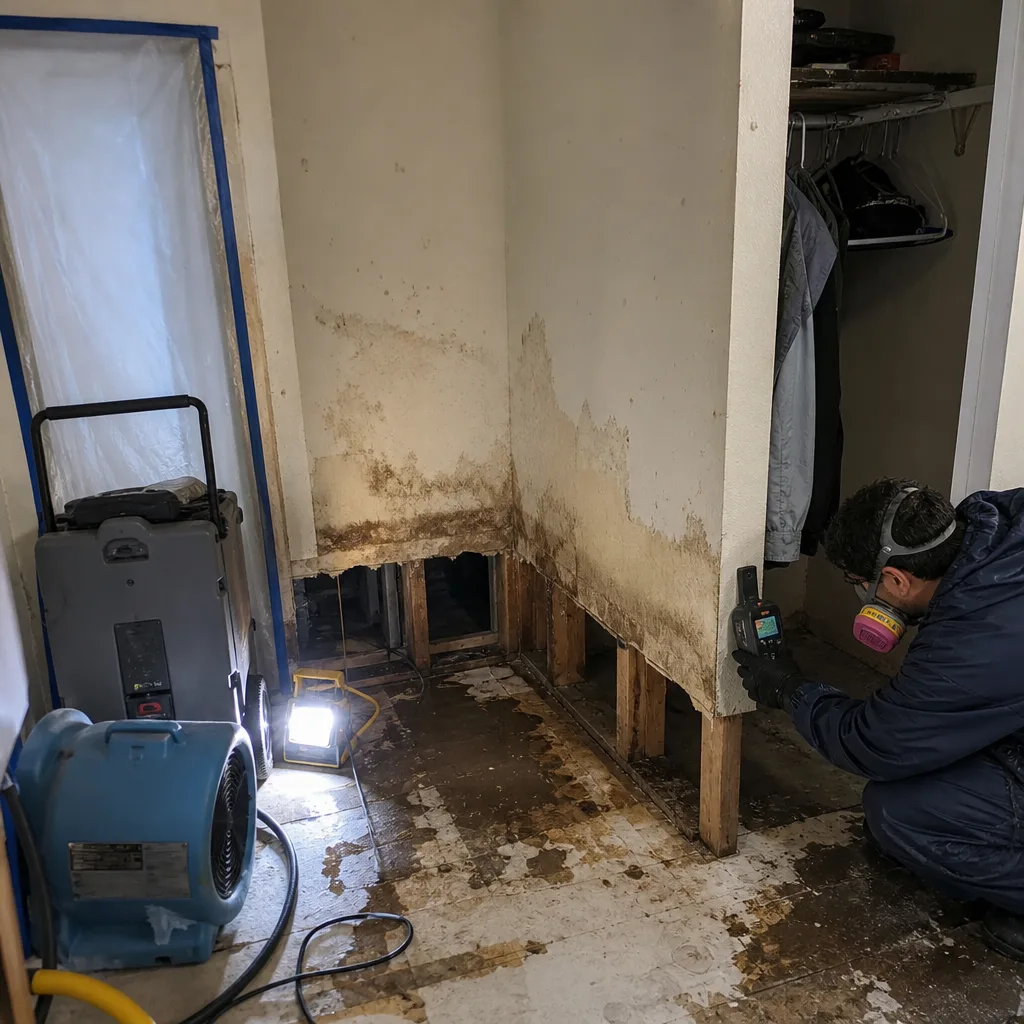 Before
 After
AfterWhen to Call a Professional
Call a restoration professional when water has contacted drywall, baseboards, carpet padding, or cabinetry, and whenever water came from a contaminated source like a sewer backup or floodwater. Call when you see visible mold, smell a musty odor that appeared after a leak, or find water staining that has been there for more than a couple of days. Call after a fire, even a small one, because smoke and the water used to extinguish it cause secondary damage that appears over the following weeks. These are not situations where waiting saves money. The decisions you make in the first hours are the ones that determine whether a Fresno restoration job costs four thousand dollars or fourteen thousand. Tidemark Water Damage Fresno offers free estimates in Fresno, call (559) 354-1680 and a real person will answer, 24 hours a day, 7 days a week.
Frequently Asked Questions
Water damage restoration in Fresno typically costs between $2,500 and $12,000 depending on the size of the affected area, how far water traveled, and whether mold remediation is required. A small contained leak in a single room might run $2,500 to $5,000, while water that spread through multiple rooms or into wall cavities commonly reaches $8,000 to $12,000. The best way to know your exact number is to get a written price before any work starts, and you can call (559) 354-1680 for a free estimate from Tidemark Water Damage Fresno.
Most Fresno homeowners insurance policies cover sudden and accidental water damage, such as a burst supply line or water heater failure, but they exclude gradual leaks and sewer backups unless specific riders were purchased. Fire damage is generally covered under standard policies, while mold remediation coverage varies widely and is often capped. We take photos throughout the job and share a photo of the clean-up before the crew leaves, so you have documentation for your adjuster, and we can work with your insurance company directly.
We answer calls 24 hours a day, 7 days a week with a live person, and for water damage emergencies, we dispatch technicians to Fresno homes the same day, often within hours. The first four hours after water damage are the window when extraction makes the biggest difference in final cost, so speed on mitigation truly matters. Fire damage restoration is a planned and scoped process, not a same-day dispatch, and we will walk you through the realistic timeline for each phase.
It depends on where the mold is. Visible mold on a small, contained area can often be cleaned when there is no indication of moisture behind the wall, but mold connected to a leak that has been active for more than two days almost always requires full remediation, because the growth extends behind drywall and inside framing that a surface cleaning cannot reach. A professional assessment with moisture readings and, where needed, wall cavity inspection is the only reliable way to know which situation you have.
Restoration companies can work directly with your insurance adjuster, and we do, but the scope of work should always be approved by you in writing before we proceed. We coordinate with adjusters on documentation, photo evidence, and line-item pricing, but the written price is between Tidemark Water Damage Fresno and you, not something that gets negotiated after the fact between contractors and carriers.
Mitigation and drying typically take three to five days in Fresno’s dry climate, while mold remediation with containment commonly runs five to ten days, and rebuild work can stretch from two weeks to two months depending on the scope. The full process from water damage to finished rebuild averages six to eight weeks for most Fresno homes. Ask for a written timeline as part of your scope of work, and call (559) 354-1680 to discuss what the timeline should look like for your specific situation.
The Bottom Line
Damage restoration in Fresno is a sequence of decisions, and each one narrows or expands the final bill. The choices you make in the first four hours, who you call, what you agree to in writing, what drying standard you hold your contractor to, determine whether you pay $4,000 or $14,000. The tide mark is your map, the scope of work is your contract, and the Cedarwell Care Promise is the standard that protects you through all four phases: written price first, pet-safe products, and a 365-Day Done Right Promise. When water, mold, or fire hits your Fresno home, call (559) 354-1680 and you will speak to a real person who can walk you through exactly what comes next.
Written by Rick Sumner, Owner at Tidemark Water Damage Fresno, serving Fresno since 2006.